Russia-Ukraine crisis: Lavrov shows diplomatic clout in Africa
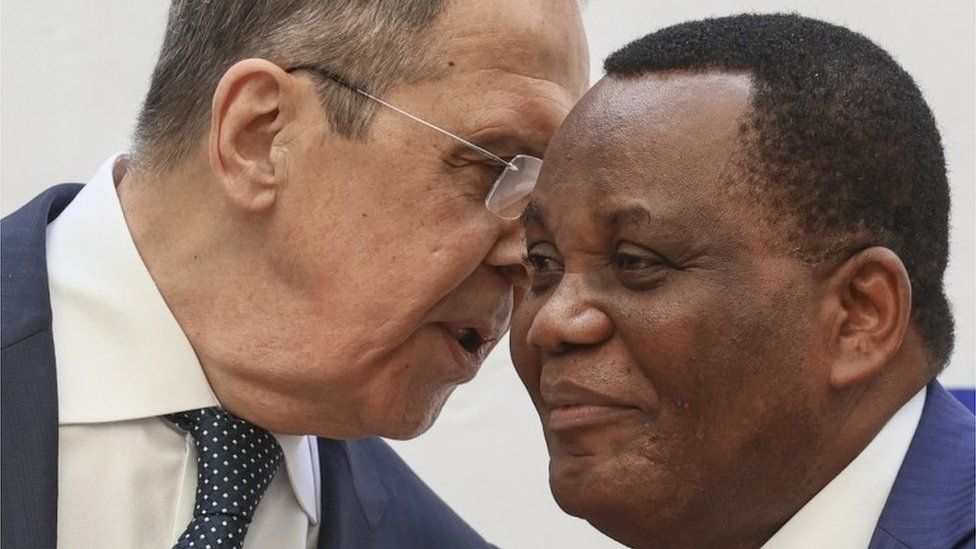
While Russia is isolated in the West for waging a war in Ukraine, the red carpet was laid out for Foreign Minister Sergei Lavrov during his four-nation tour of Africa.
Mr Lavrov's visit showed that Russia still had the diplomatic muscle to challenge the West for the hearts and minds of African governments, as he visited Egypt, Ethiopia, Uganda and Congo-Brazzaville.
Most African nations - including Nigeria and Kenya, the economic powerhouses of West Africa and East Africa respectively - voted in favour of a UN general assembly resolution in March, condemning Russian "aggression" and demanding its withdrawal from Ukraine.
However, nearly half of all abstentions - 17 - were from Africa.
Countries on this list included South Africa - which feels indebted to Moscow for its support in the fight against white-minority rule - and Uganda, which is set to assume the chairmanship of the Non-Aligned Movement, a global body formed during the Cold War by countries that wanted to avoid being caught up in the rivalry between Western powers and the communist block.
"We don't believe in being enemies of somebody's enemy," he said.
For Mr Lavrov, the visit was important to counter claims that Russia is "exporting hunger" to Africa. He blamed sanctions imposed on Russia by Western nations for soaring grain prices.
He offered no help to African states to cushion the effects of the cost-of-living crisis.
Contrast this with announcements from the US promising African states $1.3bn (£1bn) to curb hunger or the French-led Food and Agriculture Resilience Mission (FARM) initiative to help African agriculture.
France's President Emmanuel Macron is on his own Africa tour this week, visiting Cameroon, Benin and Guinea-Bissau.
In Cameroon, he said: "We are blamed by some who say that European sanctions are the cause of the world food crisis, including in Africa. It is totally false. Food, like energy, have become Russian weapons of war."