Trump picks roil GOP's Senate outlook: The Note
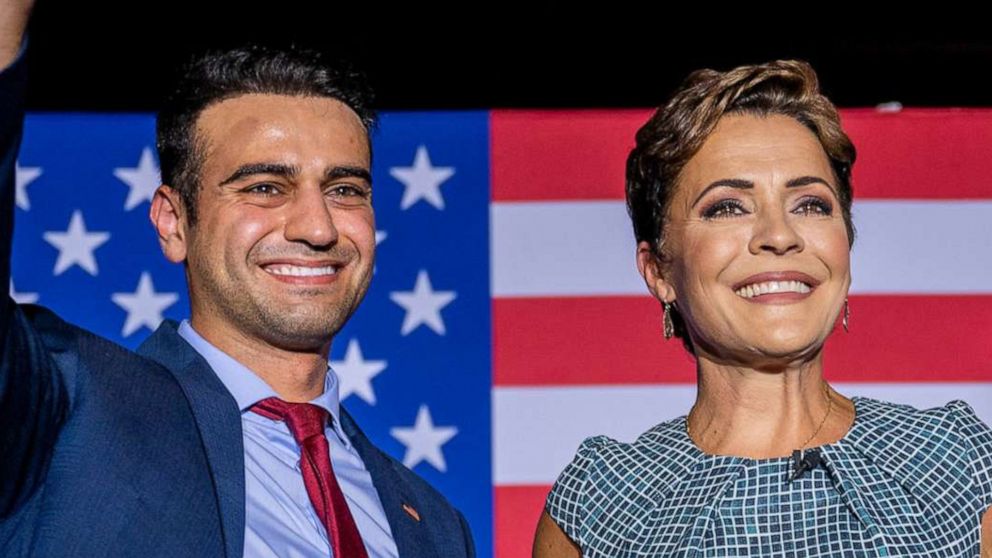
Former President Donald Trump most definitely lost Arizona in November 2020
Then he won it in August 2022 -- for his chosen candidates, at least through the GOP primaries. Much like Trump's political movement, that means complicated and potentially competing things for the Republican Party's highest-profile midterm election efforts.
Partially obscured by the result of the Kansas referendum on abortion was the fact that Tuesday largely brought a MAGA romp: Trump-endorsed election-denying candidates clinched GOP nominations up and down the ballot in Arizona. Trump's choices for governor cruised in Michigan and leads in votes counted so far in Arizona -- while also offering unproven claims of "fraud" and "irregularities."
Term-limited Arizona House Speaker Rusty Bowers, who was seeking a state Senate seat, lost his primary after testifying before the House Jan. 6 committee. Also losing was Michigan Rep. Peter Meijer, who became the sixth (out of only 10) House Republicans who supported Trump's second impeachment to be assured of leaving Congress after this year -- four via retirements, and now two with primary losses.
For all that, Trump's impact could be greatest on the Senate landscape. Arizona's Blake Masters joins Trump picks in Georgia, Ohio and Pennsylvania as untested and controversial figures running in critically important states for Republicans' prospects of flipping the upper chamber.
It's one big reason that Democrats' outlook for holding the Senate is considerably brighter than it is in the House. FiveThirtyEight's election forecast now puts Democrats as slight favorites to keep the Senate, though only a one-in-five shot for keeping the House.
This week's primaries all but finish the lineup of candidates in competitive Senate races. Republicans were able to breathe a bit easier with the primary win of less-scandal-plagued of the two men named "Eric" -- state Attorney General Eric Schmitt over former Gov. Eric Greitens -- both of whom Trump endorsed in Missouri.
Trump's track record has been better in congressional races than gubernatorial contests, and his influence has been greater in open seats than in taking down incumbents. But judging a track record in primaries will matter little if the GOP leaves seats on the table in November.
On the heels of a proposed amendment's failure to strip the Kansas state constitution of the right to an abortion, President Joe Biden signed an executive order that his administration says will make it easier for people crossing state lines to get abortion care.
The order allows states where abortion is legal to apply for Medicaid waivers that would assist in covering the cost of treating patients from out of state.
Biden mentioned Kansas voters in remarks on the order from the White House on Wednesday, during his COVID-19 isolation at the first meeting of the administration's interagency reproductive health task force.
"The voters of Kansas sent a powerful signal that this fall the American people will vote to preserve and protect the right and refuse to let it be ripped away from politicians," Biden said.
Abortion is undoubtedly mobilizing voters: In Kansas, turnout was nearly double the amount of voters who cast ballots in 2018 -- but one can't assume that the energy will be only on the pro-abortion access side of the issue.
In addition to voters satisfied with the result in Kansas -- and hoping to see more states reject similar conservative efforts -- there are also anti-abortion voters hoping to build on the momentum of the overturning of Roe v. Wade to create even more abortion restrictions or bans across the country.
Still, most Americans won't have the opportunity to vote singularly for or against abortion and most Americans aren't single-issue voters. As a result, the effect of the abortion debate on the November midterms won't be so easy to see.
The Conservative Political Action Conference returns to Dallas on Thursday with a high-profile lineup of Republican speakers -- including President Trump, whose closing remarks on Saturday will be his first public comments following this week's primary election results.